Where Giants Once Rested: The Stillness of Oribi Gorge
In the deep green folds of southern KwaZulu-Natal, Oribi Gorge offers something increasingly difficult to find: a true sense of scale, silence and space.

There are landscapes that reveal themselves slowly, and others that stop you almost immediately.
Oribi Gorge belongs to the latter.
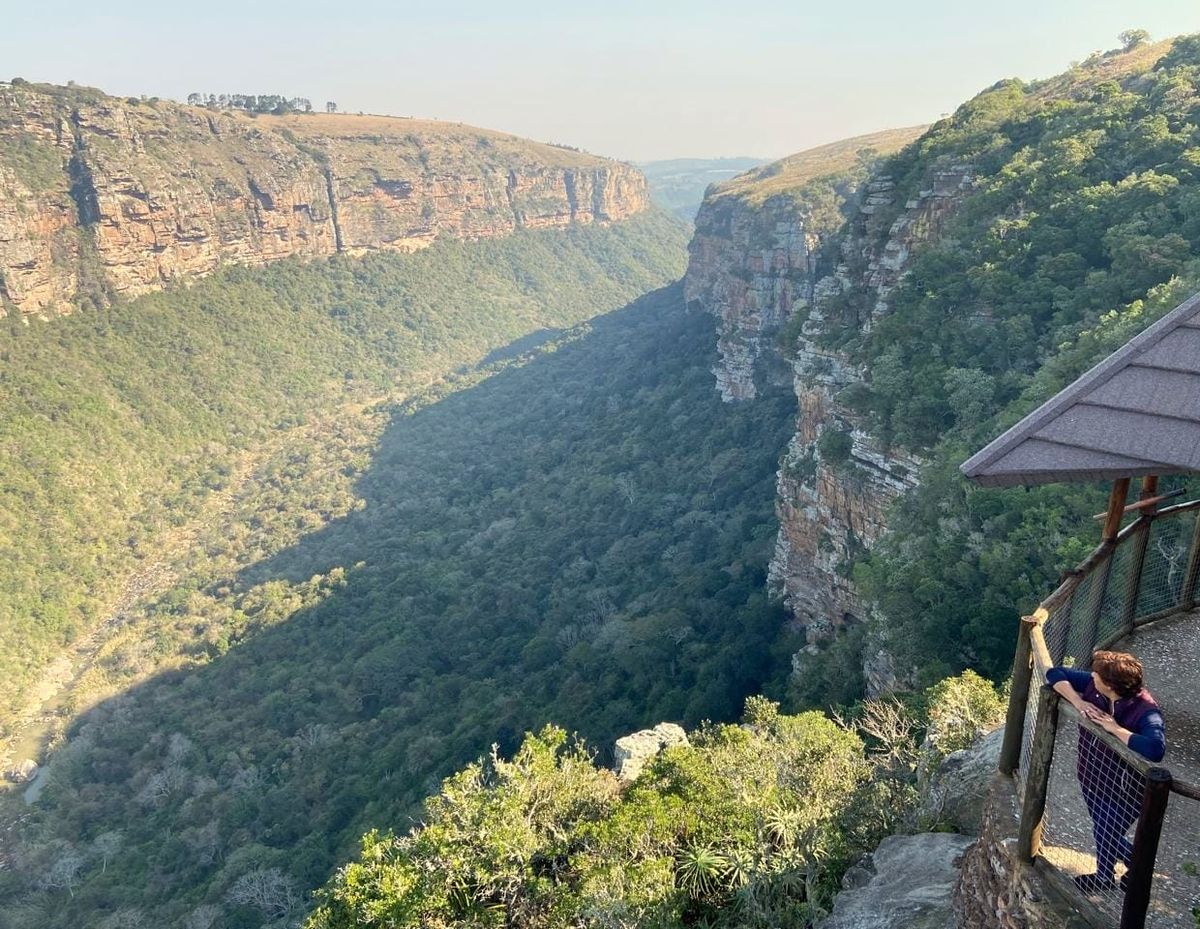
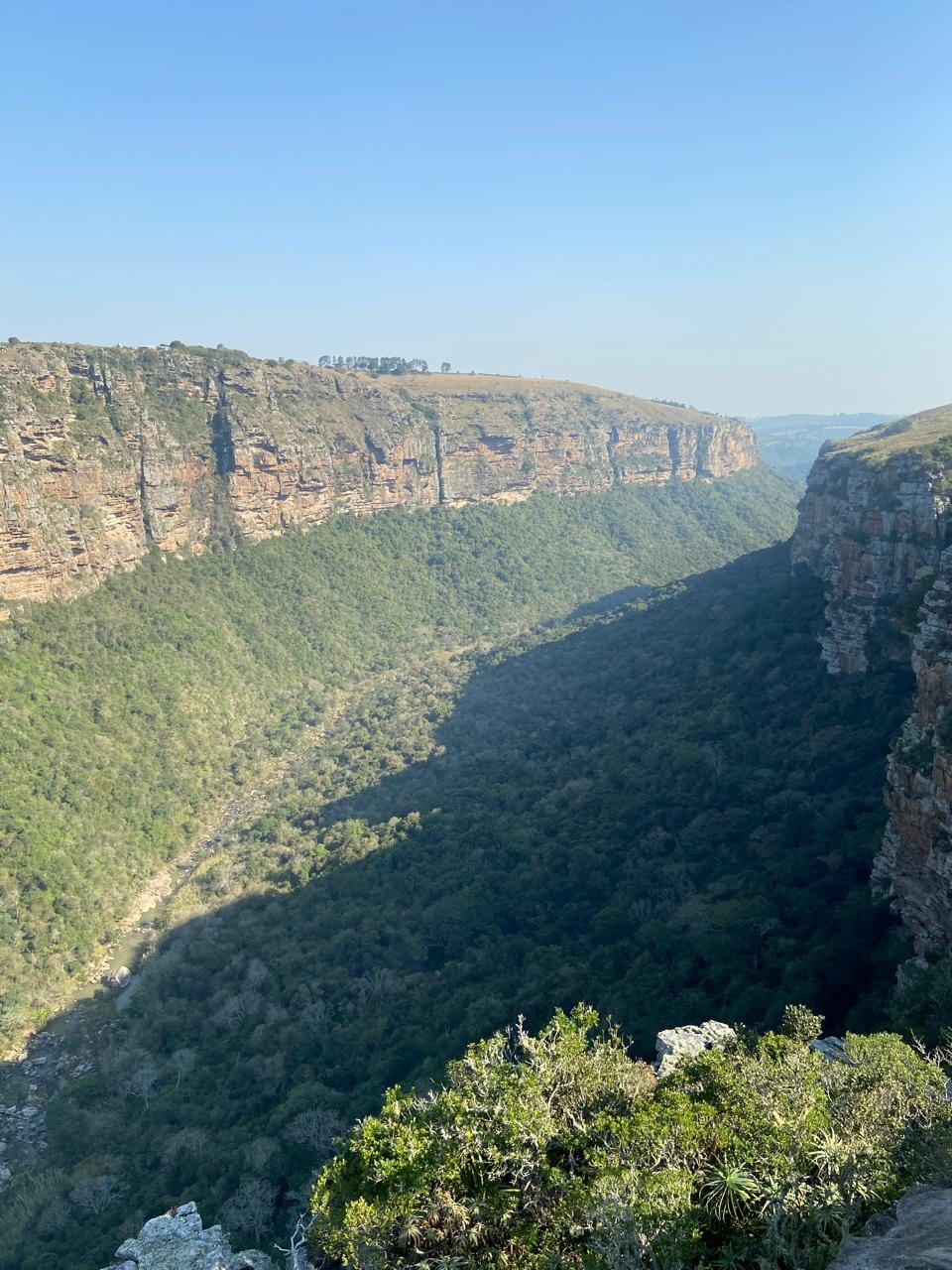
From the first viewpoint, the land seems to fall away beneath you. The valley opens wide, its forested slopes descending towards the river far below. Cliffs rise on either side, softened by distance and layers of green. Standing at the edge, it is difficult to take in the full scale of it at once.
The mountains seem less like geological formations and more like sleeping bodies, as though giants once rested here, leaving the earth folded around them.
Perhaps it's an imaginative thought, but Oribi Gorge invites that kind of wonder with its landscape that feels ancient enough to hold stories we have long forgotten.
A Landscape That Makes You Feel Small
Oribi Gorge lies inland from Port Shepstone on the KwaZulu-Natal South Coast. Carved through sandstone by the Umzimkulwana River, the gorge is known for its dramatic cliffs, dense forest and viewpoints overlooking the valley.
But facts and measurements do little to prepare you for its vastness.
From above, the valley appears almost untouched. Forest gathers in the creases of the mountains, while rock faces emerge through the vegetation in great weathered sections. The river winds somewhere below, often hidden beneath the canopy.
It is a place that changes your sense of proportion.
Here you are reminded, quite gently, of how small you are. Not in a way that feels insignificant, but in a way that offers relief. The landscape asks nothing of you and there is no need to fill the silence, document every angle or hurry towards the next experience. You can simply stand there and look.
The Stillness of the Valley
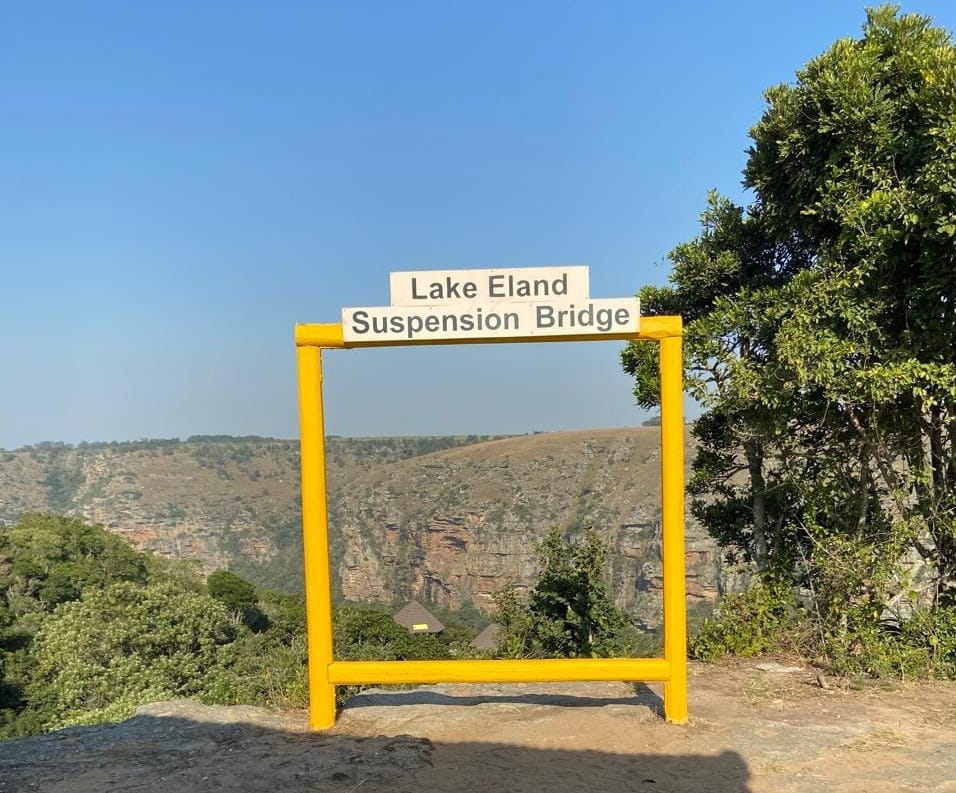
Visitors come for the gorge swing, ziplining, suspension bridges and hiking trails. These experiences have their place, particularly for those who want to encounter the landscape from a different perspective.
Yet the quality that stayed with me most was not the adrenaline. It was the stillness.
The valley has a quietness that feels physical. Even when there are voices nearby, the vastness seems to absorb them. Sounds drift out over the gorge and disappear while the landscape remains unmoved.
More Than a Viewpoint
It would be easy to treat Oribi Gorge as a scenic stop: drive in, take a photograph and continue with the day. But the landscape deserves more time than that.
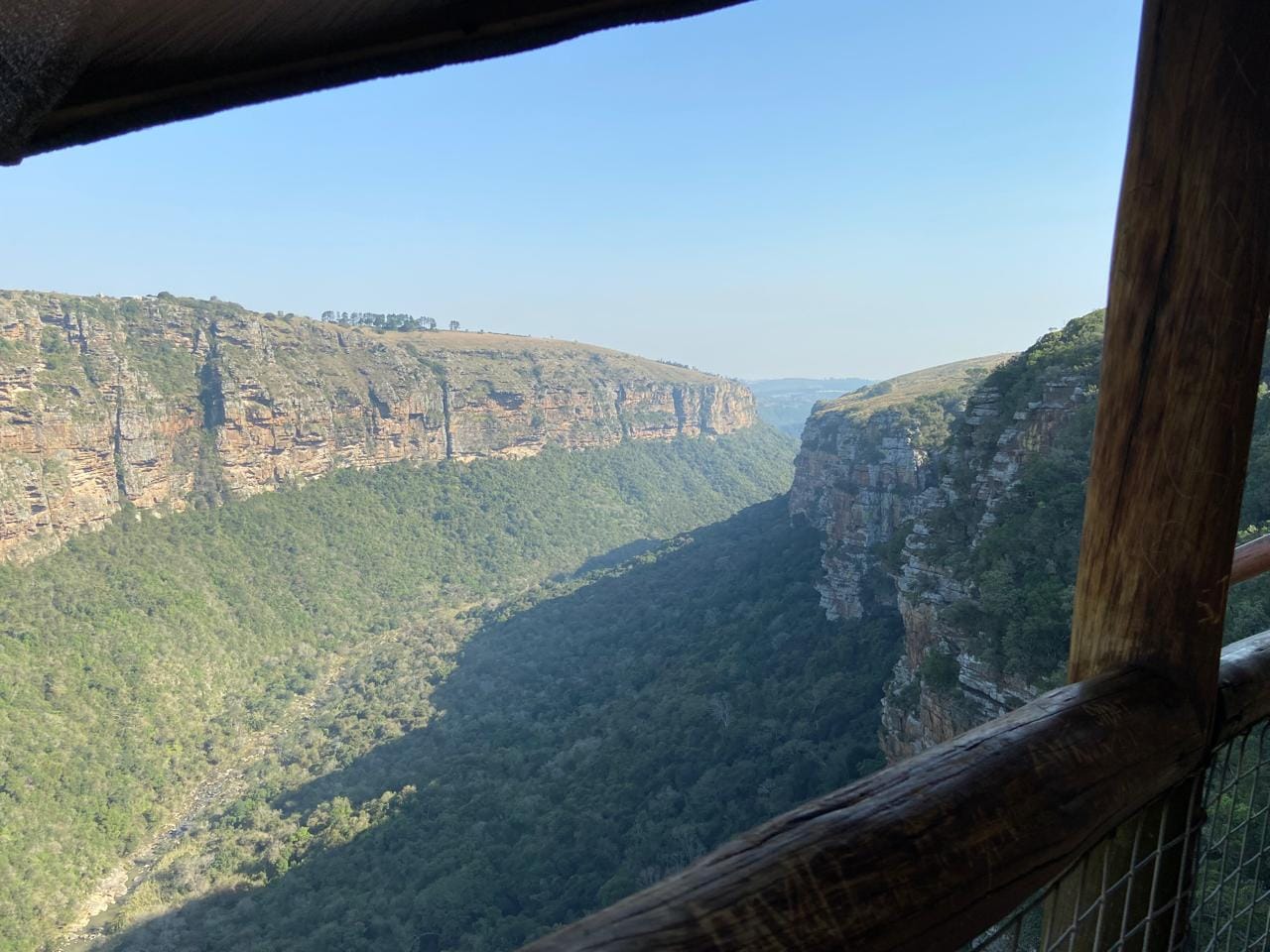
The different viewpoints allow you to see the valley from changing angles. At one, you may be looking across an uninterrupted stretch of forest. At another, the rock faces become more prominent, revealing the depth and structure of the gorge.
Leopard Rock is one of the area’s best-known viewpoints, extending above the valley and offering a clear sense of the drop beneath it. Elsewhere, walking trails lead through sections of the Oribi Gorge Nature Reserve, bringing you closer to the forest, river and waterfalls.
The reserve is also home to more than 300 recorded bird species, including Cape vultures. For visitors with more time, guided vulture-viewing experiences offer another way to understand the landscape; not simply as something beautiful to look at, but as a living habitat.
Nearby Lake Eland Game Reserve offers additional viewpoints, walking trails, game drives and a suspension bridge across the gorge. For those drawn to the adventurous side of the area, ziplining and the famous gorge swing offer a far less still encounter with the valley.
There is no single correct way to experience Oribi Gorge. You can cross above it, descend into it, walk along its edges or sit quietly and watch the light move across the cliffs.
For me, the simplest experience was also the most memorable: standing still long enough to understand just how much space lay before me.
A Place for Unhurried Travel
Oribi Gorge makes a natural addition to a KwaZulu-Natal South Coast road trip, particularly for travellers who want to see more than the coastline.
The journey inland reveals another side of the region. Beaches and seaside towns give way to farmland, rolling hills and increasingly dramatic terrain. By the time you reach the gorge, the coast feels much farther away than it really is.
Although the area can be visited in half a day, a full day allows for a slower experience. Stop at more than one viewpoint. Take a walk if conditions allow. Have lunch overlooking the valley. Leave room in the itinerary for moments that have no particular purpose.
Those are often the moments a place becomes memorable.
An overnight stay nearby gives the landscape even more time to settle around you. Mornings can be misty and subdued, while late-afternoon light brings warmth and definition to the cliffs. The gorge changes with the weather, and part of its appeal lies in not knowing exactly how it will appear.
Planning a Visit to Oribi Gorge
Where it is: Oribi Gorge is situated inland from Port Shepstone on the KwaZulu-Natal South Coast.
How long to allow: Set aside at least half a day for a scenic visit. A full day is better if you would like to include a walk, lunch, Lake Eland or one of the adventure activities.
Best time to visit: The gorge can be visited throughout the year. Clear, dry days are generally better for walking and uninterrupted views, while the greener summer months give the valley a particularly lush appearance.
What to bring: Comfortable walking shoes, water, sun protection and a light layer for changing weather. Binoculars are worthwhile for birdlife and for taking in details across the valley.
Before you go: Opening times, trail access, entrance fees and activities can change. Check current information with KZN South Coast Tourism and contact individual reserves or activity operators before travelling.
Where the Giants Rest
Certain destinations remain with you because of what you did there. Others remain because of how they made you feel.
Oribi Gorge gave me the feeling of standing in the presence of something much older and larger than myself. The valley did not need to perform. Its scale was enough. Its quiet was enough.
Looking across the mountains, I kept returning to the same thought: they looked like giants at rest, their immense bodies covered over by forest and time.
Perhaps that is why the stillness feels so complete. It is the stillness of a landscape that has been here for millions of years; and has nowhere else it needs to be.