Garden Route Travel Guide: Where to Go, Stay, Eat and Explore
The Garden Route isn't a destination you rush through. It's a collection of beaches, forests, small towns, and unforgettable road-trip moments. Here's how to experience one of South Africa's most rewarding journeys.


Few places in South Africa reward slow travel quite like the Garden Route.
Stretching along the country's southern coastline, this region combines indigenous forests, wild beaches, mountain passes, lagoons, small towns, and some of the best outdoor experiences in the country. It's the kind of place where a planned overnight stop often turns into three days, and where detours become the highlights of the trip.
I've driven the route more times than I can count. Some visits have been weekend escapes. Others have been longer stretches spent exploring back roads, hiking coastal trails, and discovering places that rarely make it onto the typical tourist itinerary. What keeps drawing me back is the variety. Within a few hours, you can move from dense forest to rugged coastline, from bustling seaside towns to quiet cabins hidden among fynbos-covered hills.
This guide is designed to help you plan a Garden Route trip that feels considered rather than rushed. Instead of trying to see everything, the focus is on the places genuinely worth your time.
Table of Contents
- What Is the Garden Route?
- Why Visit the Garden Route?
- Where Is the Garden Route?
- Best Time to Visit
- How Many Days Do You Need?
- Best Places to Visit
- Best Things to Do
- Where to Stay
- Where to Eat
- Suggested 5-Day Itinerary
- Local Travel Tips
- Frequently Asked Questions
What Is the Garden Route?
The Garden Route is one of South Africa's most scenic road-trip destinations, stretching along the country's southern coastline between Mossel Bay in the Western Cape and Storms River in the Eastern Cape. Spanning roughly 300 kilometres, the route is famous for its combination of dramatic coastlines, indigenous forests, mountain passes, lagoons, beaches, wildlife, and charming small towns.
The name "Garden Route" comes from the region's lush vegetation and natural beauty. Unlike much of South Africa's drier interior, this stretch of coastline is known for its forests, rivers, wetlands, and year-round greenery, framed by the Outeniqua and Tsitsikamma Mountains on one side and the Indian Ocean on the other.
Today, the Garden Route is one of the country's most popular self-drive journeys. Visitors come for the beaches of Plettenberg Bay, the lagoon and forests of Knysna, the wilderness areas around Wilderness and Sedgefield, and the adventure activities of Tsitsikamma National Park. Along the way, you'll find hiking trails, viewpoints, wildlife experiences, local restaurants, and some of South Africa's most memorable coastal scenery.
While it's possible to drive the route in a day, most travellers spend anywhere from three days to two weeks exploring its towns, nature reserves, beaches, and hidden corners at a slower pace. For many, the Garden Route isn't simply a road trip, it's a collection of places that invite you to linger a little longer.
| Garden Route Quick Facts | |
| Location | Southern coast of South Africa |
| Starts | Mossel Bay |
| Ends | Storms River |
| Distance | Approximately 300 km |
| Best Known For | Beaches, forests, road trips, wildlife and outdoor adventures |
| Best Time to Visit | Year-round |
Why Visit the Garden Route?
The Garden Route isn't a single destination.
It's a collection of places, landscapes, and experiences stitched together by one of South Africa's most scenic drives.
What makes it special isn't any one attraction. It's the combination of elements working together. One morning might begin with coffee overlooking the ocean in Plettenberg Bay. By lunch, you're walking beneath towering yellowwood trees in the forests near Knysna. Before sunset, you're watching waves crash against dramatic cliffs in Tsitsikamma.
Unlike destinations that rely on a handful of famous landmarks, the Garden Route reveals itself slowly. The beaches, forests, hiking trails, restaurants, and small towns all contribute to the experience.
For travellers who enjoy road trips, outdoor adventures, and beautiful places with character, it's difficult to think of a better region in South Africa.
Where Is the Garden Route?
The Garden Route runs along South Africa's southern coastline between Mossel Bay in the west and Storms River in the east, although many travellers extend their journey further into the Eastern Cape.
The route follows the N2 highway and passes through several of the region's most popular destinations:
- Mossel Bay
- Wilderness
- Sedgefield
- Knysna
- Plettenberg Bay
- Nature's Valley
- Storms River
Most visitors begin their trip from either Cape Town or Gqeberha (Port Elizabeth).

Driving from Cape Town
Cape Town to Plettenberg Bay takes approximately 6–7 hours without extended stops.
Many travellers break the journey by spending a night in Hermanus, Swellendam, or Oudtshoorn.
Driving from Gqeberha
Gqeberha to Plettenberg Bay takes around 2.5 hours, making it a convenient starting point for shorter Garden Route itineraries.
Best Time to Visit the Garden Route
One of the region's greatest strengths is that it works year-round.
Summer (December to February)
Summer brings warm weather, long beach days, and lively coastal towns.
Pros:
- Warm ocean temperatures
- Best beach conditions
- Vibrant atmosphere
Cons:
- Peak holiday crowds
- Higher accommodation prices
- Busy restaurants
Autumn (March to May)
This is arguably my favourite season.
The weather remains pleasant, the roads quieten down, and accommodation becomes easier to secure.
Expect:
- Mild temperatures
- Fewer crowds
- Excellent hiking conditions
Winter (June to August)
Winter surprises many first-time visitors.
While you'll encounter cooler temperatures and occasional rain, you'll also find crisp mornings, empty trails, and excellent whale watching.
It's also one of the best times to book luxury stays at more accessible rates.
Spring (September to November)
Spring brings green landscapes, wildflowers, and increasingly warm weather.
It's an excellent shoulder season for travellers wanting a balance between good conditions and fewer visitors.
How Many Days Do You Need?
3 Days
A long weekend allows enough time to focus on one area.
I'd recommend choosing either:
- Knysna and Wilderness
or - Plettenberg Bay and Tsitsikamma
Trying to cover the entire Garden Route in three days often feels rushed.
5 Days
Five days is the sweet spot for most travellers.
You'll have enough time to:
- Explore multiple towns
- Enjoy a few hikes
- Spend time on the beaches
- Discover local restaurants
- Avoid feeling like you're constantly packing and unpacking
7–10 Days
If your schedule allows, this is when the Garden Route truly shines.
You can slow down, spend longer in each destination, and make room for spontaneous discoveries that often become the most memorable parts of the trip.
The Best Places to Visit on the Garden Route
Wilderness

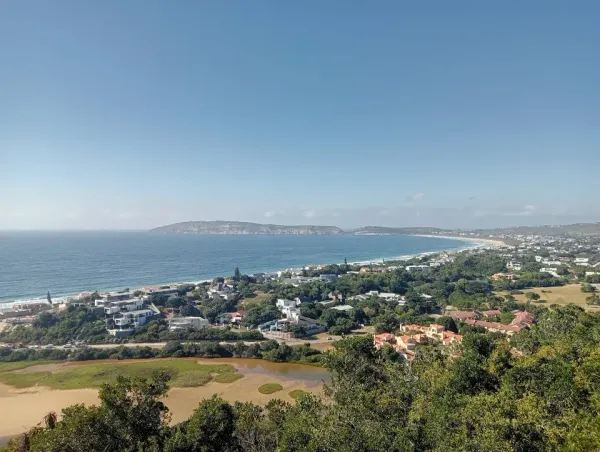
Wilderness feels like the point where the pace of life begins to slow.
The town sits between forest-covered mountains and a long stretch of beach, creating a landscape that feels distinctly different from the larger coastal hubs.
Don't miss:
- Map of Africa viewpoint
- Wilderness Beach
- Kaaimans River area
- Kingfisher Trail
Best for:
Nature lovers, couples, photographers, and slow travellers.
Knysna

Knysna remains one of the Garden Route's most iconic destinations.
The lagoon forms the heart of the town, while surrounding forests, viewpoints, and restaurants make it an excellent base for exploring the region.
Don't miss:
- Knysna Heads
- Featherbed Nature Reserve
- Knysna Waterfront
- Forest drives
Best for:
Families, first-time visitors, food lovers.
Plettenberg Bay

If I had to choose one base for a first Garden Route trip, Plettenberg Bay would probably be it.
The combination of beaches, hiking trails, wildlife experiences, restaurants, and nearby attractions makes it one of the most versatile destinations on the route.
Don't miss:
- Robberg Nature Reserve
- Keurbooms Beach
- Lookout Beach
- Old Nick Village
- Harkerville Trails
Best for:
Almost everyone.
It's one of the few destinations that genuinely works for couples, families, adventure travellers, and luxury seekers alike.
Read more about Best Things to Do in Plettenberg Bay.
Nature's Valley
Nature's Valley feels worlds away from the busier sections of the Garden Route.
Tucked between indigenous forest and a sweeping beach at the edge of Tsitsikamma, it's one of the few places along the route that still feels largely untouched. Mobile signal is patchy, the roads are quiet, and most people come here for the simple pleasure of walking, swimming, and spending time outdoors.
Don't miss:
- Nature's Valley Beach
- Salt River Mouth
- The start of the Otter Trail
- Forest walks through Tsitsikamma
Best for:
Travellers looking to disconnect.
Tsitsikamma

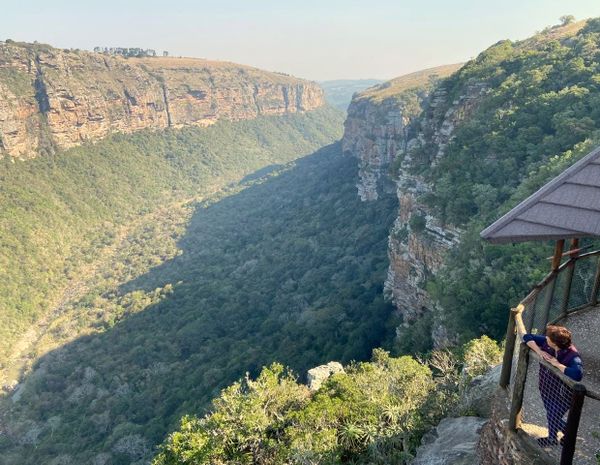
Tsitsikamma is where the Garden Route becomes more dramatic.
The coastline is rugged, the forests are dense, and adventure activities sit alongside some of the country's most rewarding hiking trails.
The suspension bridge at Storms River remains one of the most photographed locations in South Africa, but the wider national park deserves far more attention than many visitors give it.
Don't miss:
- Storms River Mouth
- Suspension Bridge
- Waterfall Trail
- Kayaking and lilo adventures
- Tsitsikamma Forest
Best for:
Hikers, adventure seekers, photographers, and nature lovers.
The Best Things to Do on the Garden Route
Hike Robberg Nature Reserve
If you only do one hike on the Garden Route, make it Robberg.
The peninsula extends into the ocean just outside Plettenberg Bay, creating a landscape of cliffs, dunes, rocky shoreline, and endless sea views.
The full circular route takes several hours, but even the shorter options offer exceptional scenery.
Arrive early if possible. The light is softer, temperatures are cooler, and you'll often have sections of the trail almost entirely to yourself.
Walk the Beaches
The beaches are one of the Garden Route's greatest assets.
Some favourites include:
- Keurbooms Beach
- Robberg Beach
- Wilderness Beach
- Nature's Valley Beach
- Lookout Beach
Each offers something slightly different, from long walks and swimming to wildlife sightings and surfing.
Explore the Indigenous Forests
The forests around Knysna, Wilderness, and Tsitsikamma create a side of the Garden Route that many visitors underestimate.
Walking beneath giant yellowwood trees offers a completely different experience to the coastline.
Some of the best forest walks include:
- Garden of Eden
- Diepwalle Forest
- Harkerville Trails
- Kingfisher Trail
Visit the Knysna Heads

The Heads mark the narrow entrance between the Knysna Lagoon and the Indian Ocean.
It's one of those places that's worth visiting more than once.
Conditions change constantly depending on weather, tide, and light.
Early morning and late afternoon are particularly rewarding.
Go Whale Watching

From roughly June to November, southern right whales visit the coastline.
Plettenberg Bay often offers some of the best viewing opportunities.
During peak season it's not unusual to spot whales from viewpoints, beaches, and coastal hiking trails.
Spend a Day on the Water
The Garden Route is shaped by its lagoons, rivers, and ocean.
Popular options include:
- Kayaking in Wilderness
- Boat cruises on the Knysna Lagoon
- Ocean safaris in Plettenberg Bay
- Kayaking in Storms River
Where to Stay on the Garden Route
One of the biggest mistakes travellers make is changing accommodation every night.
Choose one or two excellent bases instead.
For Couples
Look for:
- Forest cabins near Harkerville
- Boutique guesthouses in Plettenberg Bay
- Coastal retreats overlooking the ocean
The quieter properties often provide a far richer experience than larger resorts.
For Families
Plettenberg Bay remains one of the easiest destinations for families.
The beaches are accessible, there are plenty of activities nearby, and accommodation options range from self-catering homes to luxury resorts.
For Nature Lovers
Consider:
- Wilderness
- Nature's Valley
- Tsitsikamma
- Forest properties near Knysna
These areas place you closest to hiking trails, forests, and wildlife.
For Luxury Travellers
The Garden Route has matured significantly over the past decade.
Many properties now combine thoughtful design, exceptional locations, and high levels of service without feeling overly formal.
Plettenberg Bay and Knysna offer the widest range of luxury accommodation.
Where to Eat on the Garden Route
The food scene has evolved considerably in recent years.
Plettenberg Bay
Some local favourites include:
- Barrington's
- Nguni
- Emily Moon
- Newstead Lund Family Vineyards
- Sol Kitchen
Knysna
Popular options include:
- Île de Païn
- Tapas & Oysters
- East Head Café
- Drydock Food Co.
Wilderness
Wilderness rewards slower exploration.
Look for:
- Blue Olive
- Pomodoro
- Serendipity
The smaller establishments often deliver the most memorable experiences.
A Suggested 5-Day Garden Route Itinerary
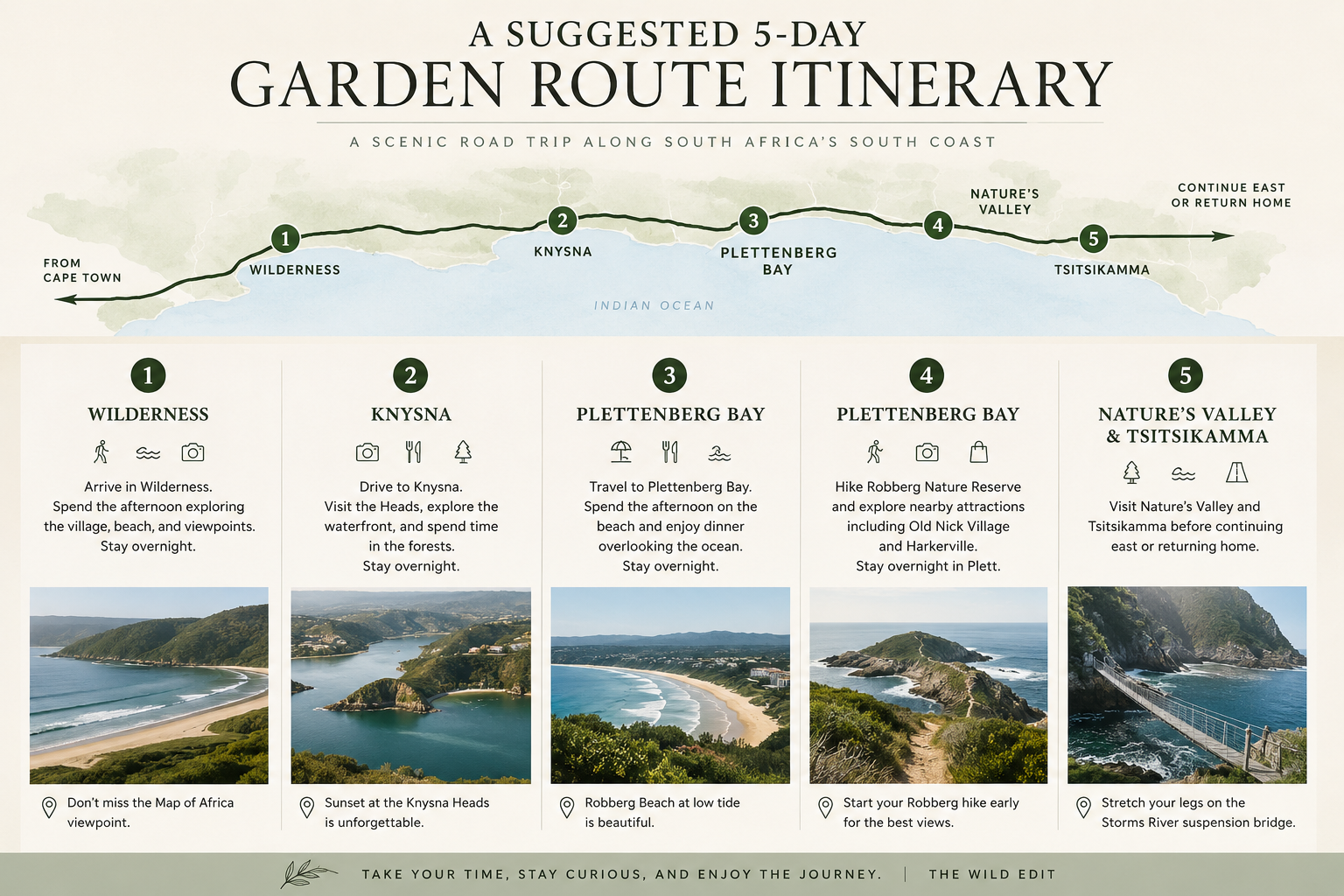
Day 1
Arrive in Wilderness.
Spend the afternoon exploring the village, beach, and viewpoints.
Stay overnight.
Day 2
Drive to Knysna.
Visit the Heads, explore the waterfront, and spend time in the forests.
Stay overnight.
Day 3
Travel to Plettenberg Bay.
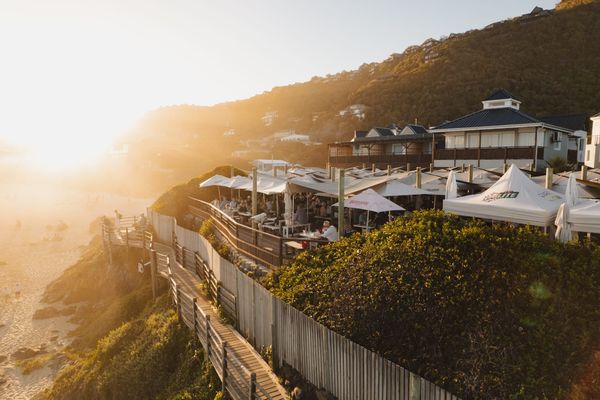
Spend the afternoon on the beach and enjoy dinner overlooking the ocean.
Stay overnight.
Day 4
Hike Robberg Nature Reserve and explore nearby attractions including Old Nick Village and Harkerville.
Stay overnight in Plettenberg Bay.
Day 5
Visit Nature's Valley and Tsitsikamma before continuing east or returning home.
My Favourite Garden Route Experiences

After many visits, it's rarely the headline attractions that stay with me.
It's standing on Robberg just after sunrise with hardly another person around.
It's driving through the forests after rain when everything smells fresh and earthy.
It's finding a quiet stretch of beach on a weekday afternoon and realising you have kilometres of coastline almost entirely to yourself.
It's lingering over coffee in Wilderness with no real plans for the day.
Those are the moments that define the Garden Route.
Not the checklist. The feeling.
Garden Route Travel Tips
Book Early in Summer
December and January are exceptionally busy.
The best accommodation often sells out months in advance.
Don't Try to See Everything
The Garden Route rewards slower travel.
Choose fewer destinations and spend longer in each.
Hire a Car
While tours exist, a vehicle offers the flexibility that makes the region so enjoyable.
Build Weather Flexibility Into Your Plans
Conditions can change quickly.
Having a loose itinerary allows you to adapt and make the most of good weather.
Frequently Asked Questions
What is the best month to visit the Garden Route?
March, April, September, and October generally offer the best balance of pleasant weather, fewer crowds, and good value.
Is five days enough for the Garden Route?
Yes. Five days allow enough time to experience several destinations without feeling rushed.
Which town is best to stay in on the Garden Route?
For first-time visitors, Plettenberg Bay is often the most versatile base thanks to its beaches, hiking trails, restaurants, and proximity to major attractions.
Can you do the Garden Route without a car?
It's possible, but you'll miss much of what makes the region special. A self-drive trip remains the best option.
Is the Garden Route worth visiting in winter?
Absolutely. Winter brings quieter roads, lower accommodation rates, excellent hiking conditions, and whale watching opportunities.
Don't Miss Out On This Beautiful Route
The Garden Route has a way of changing the pace at which you travel.
You arrive expecting a road trip and leave remembering individual moments: a forest trail, a sunrise walk, a meal that lasted longer than planned, a beach you stumbled upon by accident.
That's why people keep coming back.
Not because there are endless attractions, but because the region creates space to slow down and experience them properly.
If it's your first visit, resist the temptation to rush.
Pick a few places, stay a little longer, and let the route reveal itself.
See you in The Wild